
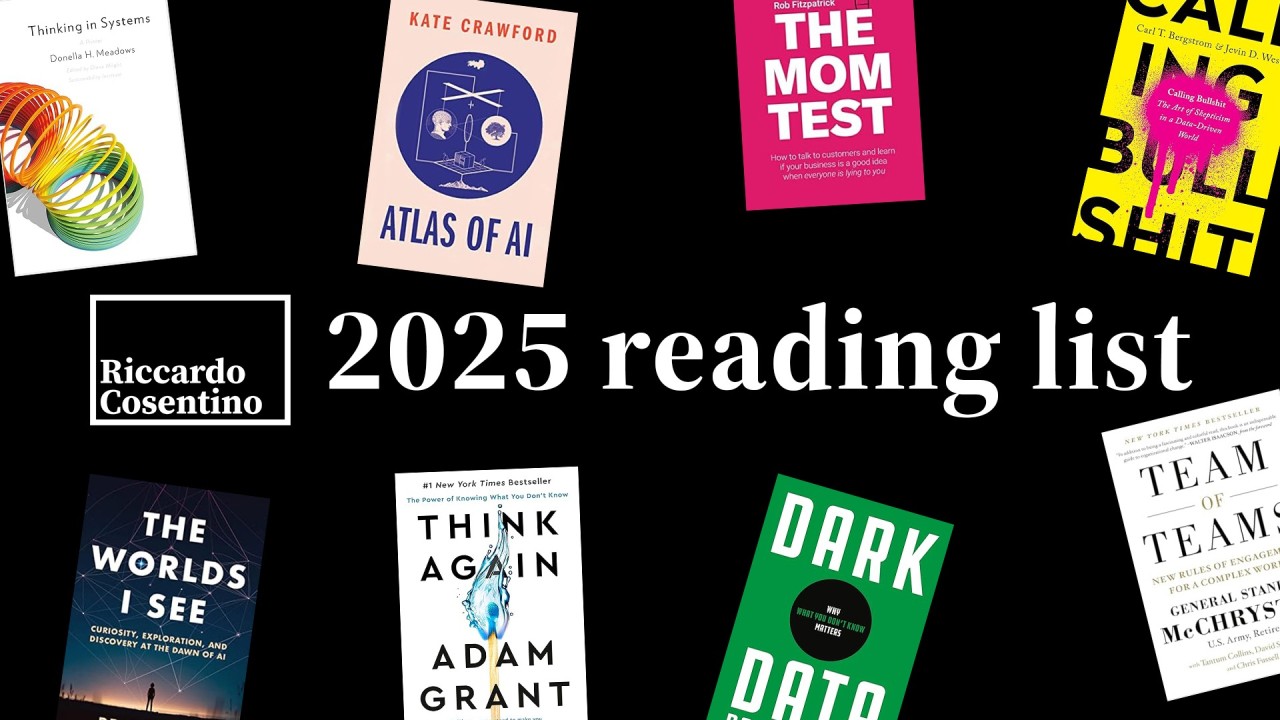
My fifth annual reading list, curated for leaders who refuse to stop learning.
This year I leaned into books that punch holes in old assumptions, whether that’s about how we structure organisations, interpret data, or even frame our own thinking. Below you’ll find eight titles that changed the way I lead, learn, and question. Grab the one that speaks to your current challenge—then let me know what you took away.
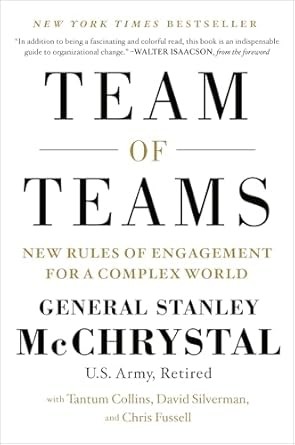
1. Team of Teams – General Stanley McChrystal et al. McChrystal recounts how the U.S. Joint Special Operations Task Force in Iraq abandoned a rigid hierarchy and rebuilt itself into a networked “team of teams” in order to out-learn and out-move Al-Qaeda. I’ve managed megaprojects where silos kill momentum. McChrystal’s daily, all-hands video briefings showed me what radical information-sharing looks like—no excuses about rank or geography.
My Key Takeaways
- Complexity beats size; adapt your structure, not just your strategy.
- Transparency is a force-multiplier—share early, share often.
- Decision-making velocity > perfect plans.
- Leaders become gardeners: create the climate, trim the weeds, let teams grow.
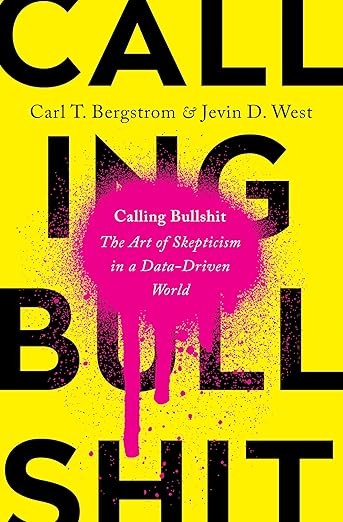
2. Calling Bullshit – Carl Bergstrom & Jevin West Two scientists arm us with a playbook for spotting statistical sleight-of-hand, shaky graphs, and “too-good-to-be-true” claims in a data-soaked world. I mentally shout “bullshit” daily, but this book gave me the vocabulary to do it out loud—and the discipline to check my own biases first.
My Key Takeaways
- If a stat feels magic, dig for the missing denominator.
- Correlation parties hard with coincidence; causation rarely shows up.
- Visuals persuade faster than text—treat every chart as suspect until proved otherwise.
- Healthy scepticism isn’t cynicism; it’s respect for truth.
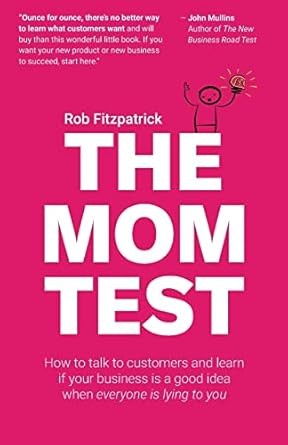
3. The Mom Test – Rob Fitzpatrick
As I explore entrepreneurship and what makes a successful startup, I’ve learned that the first battlefield isn’t funding or tech—it’s the conversation you have with potential customers. Fitzpatrick’s “Mom Test” offers a simple stress-test for those talks: ask questions so well-designed that even your ever-encouraging Italian mamma can’t accidentally feed you false hope. The objective is evidence, not compliments. As I dip my toe into early-stage investing, this book nudged me to move beyond polite praise and examine the gritty evidence that shows whether a venture truly deserves backing.
My Key Takeaways
- Talk problems, not solutions; your concept isn’t the conversation.
- Seek evidence of past behaviour over future intention.
- “Would you pay for this?” is hypothetical—ask what they already spend on.
- Compliments are noise; commitments (time, money, data) are signal.
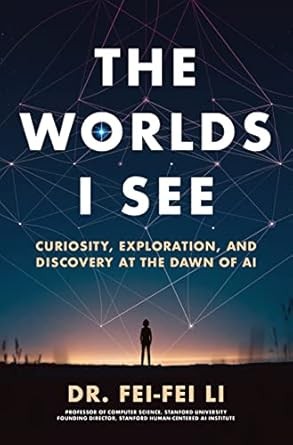
4. The Worlds I See – Dr. Fei-Fei Li Li’s memoir tracks the birth of modern computer vision—from ImageNet to the 2012 “AlexNet moment” that lit the AI rocket. I knew the headline story; reading Li’s first-person slog through funding deserts and lab scepticism gave me goosebumps. Innovation is equal parts obsession and serendipity.
My Key Takeaways
- Datasets are destiny: scale can flip a “failed” algorithm into a breakthrough.
- Progress often comes from outsiders stubborn enough to ignore consensus.
- Translational leaders bridge two universes—academia and application.
- If the mission matters, keep knocking; the right door eventually opens.
5. Dark Data – David Hand
Hand exposes the blind spots created by missing, hidden, or misleading data—and how they sabotage decisions from finance to public health. On infrastructure bids, “unknown unknowns” can sink a billion-dollar forecast. Hand reminds me to hunt for what isn’t in the spreadsheet.
My Key Takeaways
- Absence of evidence ≠ evidence of absence.
- Model assumptions age faster than models.
- Incentives shape data quality—ask who benefits from the gap.
- Build in error margins; humility is cheaper than rework.
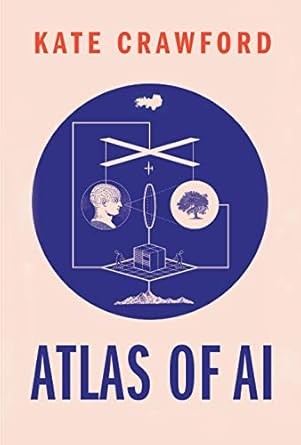
6. Atlas of AI – Kate Crawford Crawford maps the social, political, and environmental costs of AI—from cobalt mines to click-farm labelers—arguing it’s the extractive industry of our century. AI isn’t just code; it’s supply chains, carbon, and human labour. Before I champion tech on project sites, Crawford makes me ask: at what price?
My Key Takeaways
- Every algorithm has a footprint—measure it.
- Power accrues to those who own data; watch for new gatekeepers.
- “Bias” is baked into datasets, not just outputs.
- Responsible AI means lifecycle accountability—from mine to model.
7. Thinking in Systems – Donella Meadows A concise primer on feedback loops, leverage points, and why linear fixes backfire in complex systems. Major programmes are ecosystems, not Gantt charts. Meadows helps me see reinforcing loops before they spiral—cashflow, politics, or public sentiment.
My Key Takeaways
- Structure drives behaviour; shift the structure to change the outcome.
- Delays obscure cause and effect—model them explicitly.
- Small, well-placed interventions outperform brute-force.
- Beware “fixes that fail”—today’s solution can seed tomorrow’s crisis.
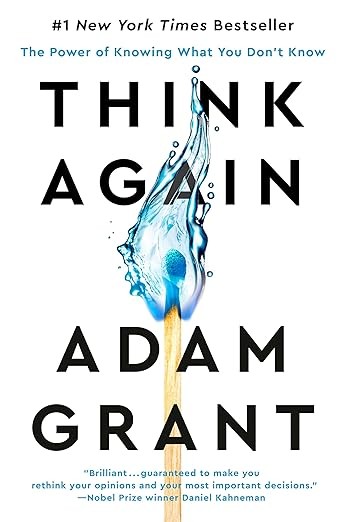
8. Think Again – Adam Grant Grant champions the habit of re-examining opinions, embracing uncertainty, and holding convictions lightly. After 25 years in infrastructure, dogma creeps in. Grant nudges me to swap “I’m right” for “I might be wrong—let’s explore.”
My Key Takeaways
- Identity shouldn’t be welded to ideas; detach to adapt.
- Cultivate “challenge networks,” not echo chambers.
- Confidence is a sliding scale; pair it with curiosity.
- The best debates aim to learn, not to win.
I’d love to hear which of these resonates, or what should make next year’s cut. Happy reading—and, as always, keep questioning.
Previous Reading Lists (for the completists)